
PsyProxy
Where language becomes measurement: interpretable AI for text
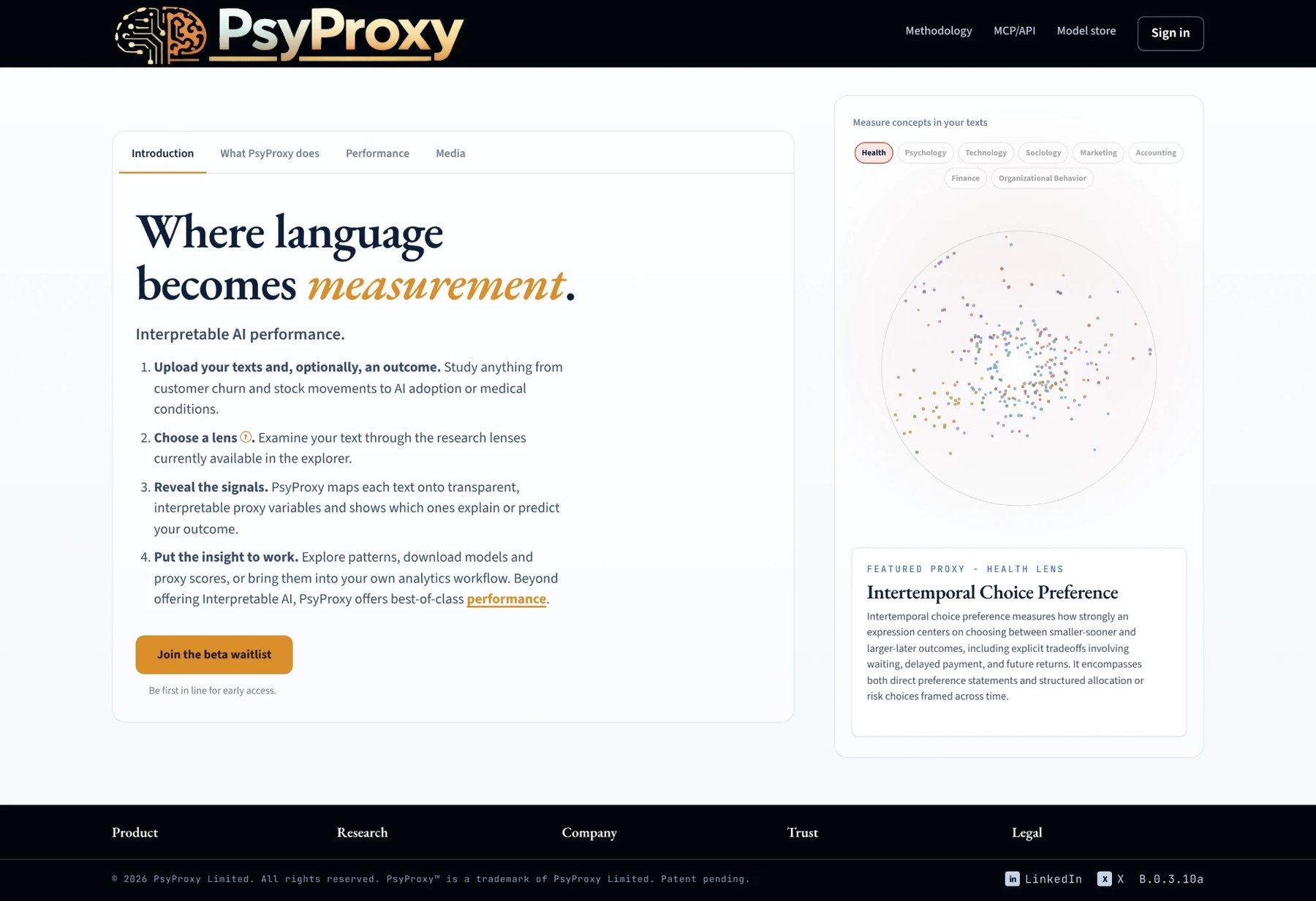
Organisations sit on vast amounts of text: customer reviews, employee feedback, patient narratives, annual reports. Large language models can predict outcomes from such text, but they rarely explain why. PsyProxy takes a different route: it translates text into interpretable measurements of psychological and social constructs, and builds transparent models on top of them.
Since June 2026 I have been Scientific Advisor of PsyProxy Limited (USA). My work focuses on developing and evaluating interpretable AI methods for text analytics, in particular the construction and validation of interpretable models that measure psychological constructs in unstructured text. The platform builds on results of the ALIGNS research line.
How it works
- Upload texts and, optionally, an outcome, from customer churn and stock movements to AI adoption or medical conditions.
- Choose a lens.
- Reveal the signals: each text is mapped onto transparent, interpretable proxy variables, and PsyProxy shows which ones explain or predict the outcome.
- Put the insight to work: explore patterns, download models and proxy scores, or bring them into your own analytics workflow.
Lenses: calibrated dictionaries of constructs
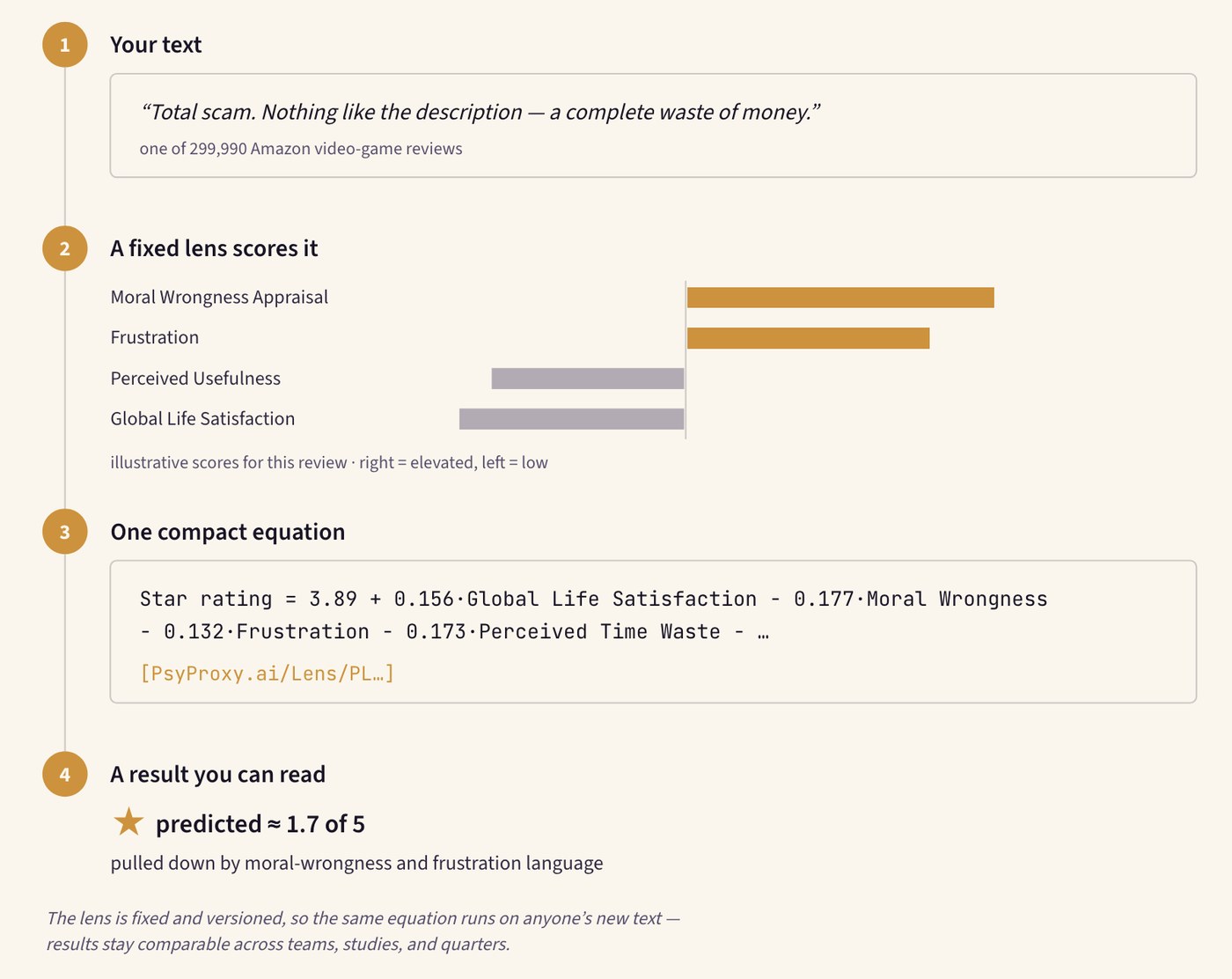
A lens is a calibrated, versioned dictionary of dimensions for one field. PsyProxy currently offers eight lenses with 3,175 dimensions, from health (depressive distress, pain interference, treatment burden) and psychology (self-efficacy, novelty seeking, interpersonal trust) to technology (usability, system reliability, online privacy concern), sociology, marketing, organisational behaviour, and experimental lenses for accounting and finance.
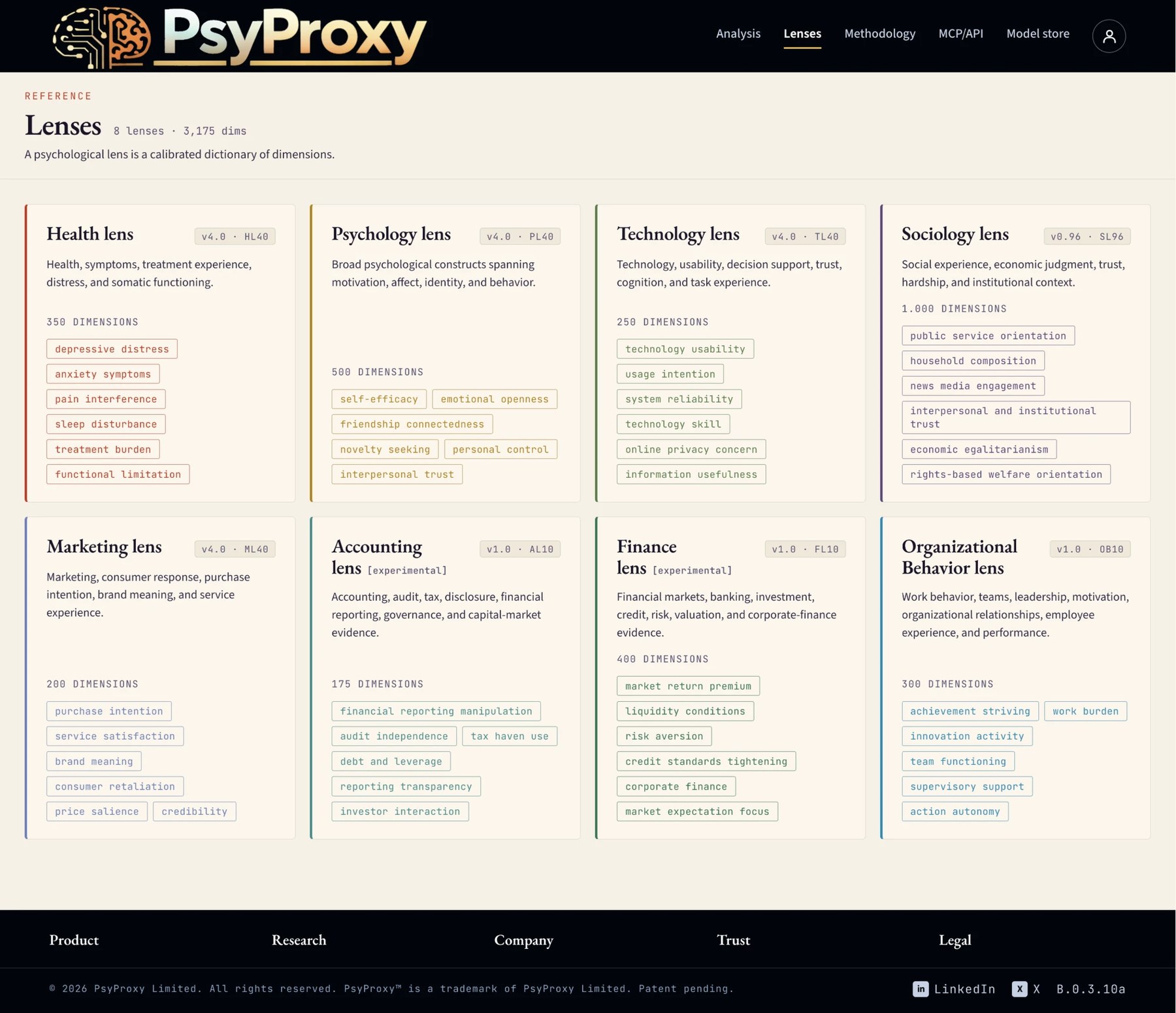
Because a lens is fixed and versioned, the same equation can be applied to anyone’s new texts, and results stay comparable across teams, studies and time.
Models you can read
Instead of a black box, PsyProxy produces one compact equation: a linear model over named constructs, with cross-validated and holdout performance. Each equation carries a marker of the lens and version it was built with, so it can be shared and reused.
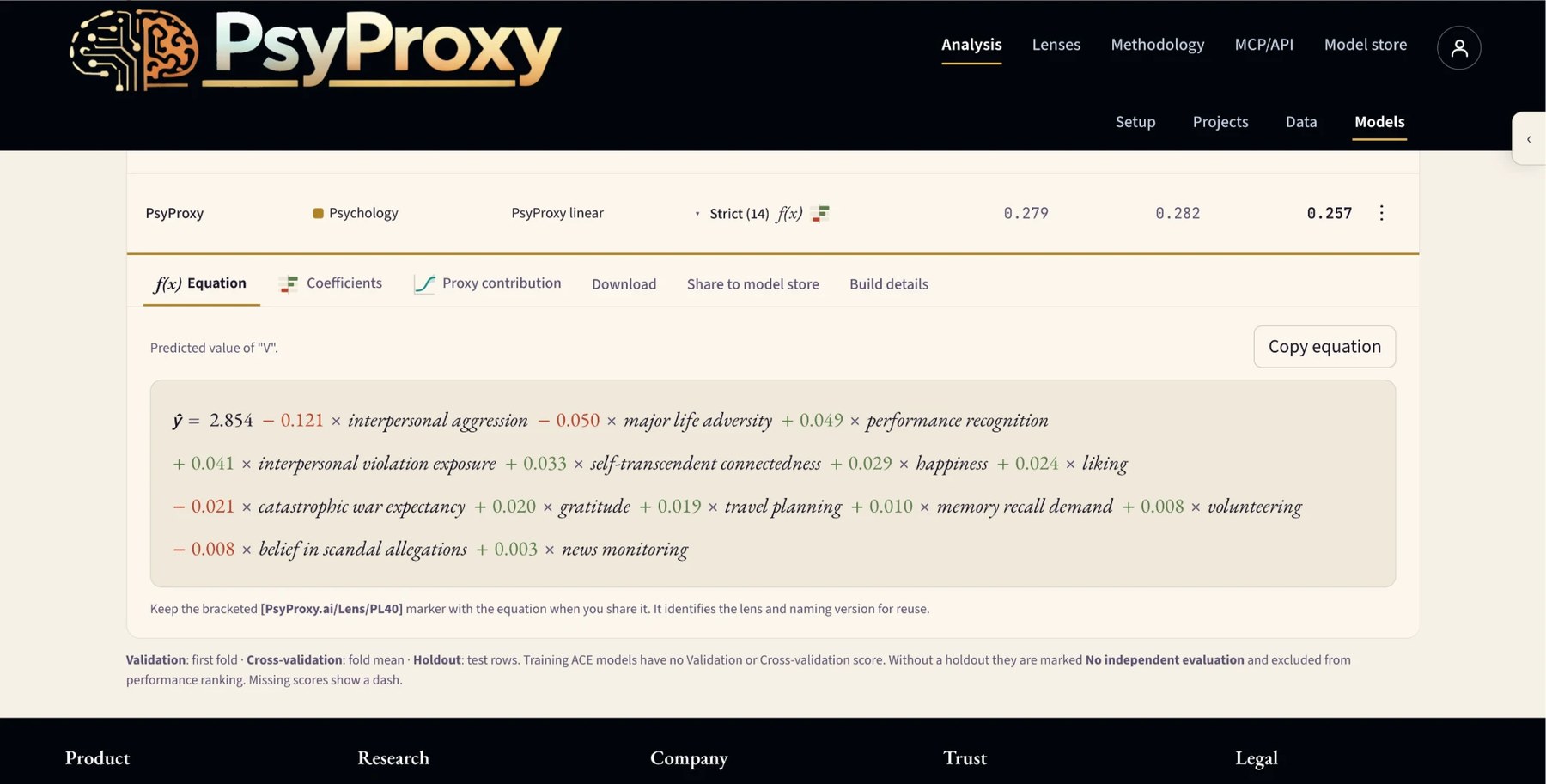
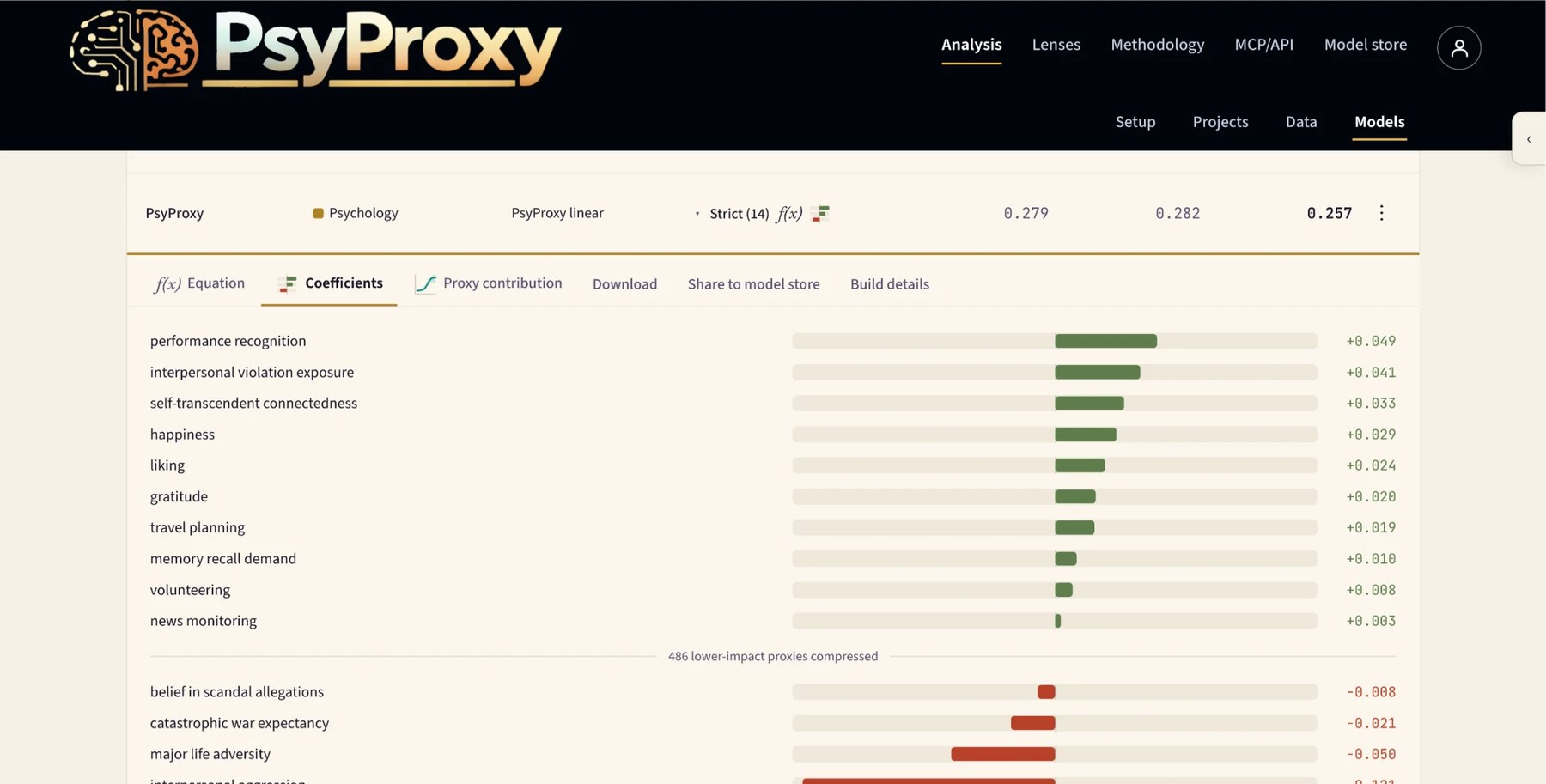
This is computational measurement in practice: language models as measurement instruments, combined with explicit, validated constructs, so that predictions can be explained, questioned and compared. See also my research agenda.