
Healthcare Fraud Detection
Outlier detection in U.S. Medicaid claims data
Roughly US$700 billion of the US$2.7 trillion spent on health care in the United States is estimated to be lost to fraud, waste and abuse. Medicaid, the public health insurance for about 70 million people with low income and 8 million people with disabilities, is particularly susceptible: it is organised separately in every state, communication across programmes is limited, and its patient population is hard to track. Estimates of fraud in Medicaid and Medicare range from 3% to 20% of their budgets, around US$80 billion each.
Fraud in health insurance costs taxpayers billions and can put patients at risk. Data mining can reveal fraudulent and even harmful practices by providers, as well as organised crime. Together with the San Diego Supercomputer Center (UC San Diego) and the University of Twente, with the Centers for Medicare & Medicaid Services (CMS) as practice partner, we developed data-driven methods to find them.
Fraud schemes and the unknown unknowns
Fraud schemes include billing for services never rendered (identity theft, phantom billing), up-coding of services, duplicate billing, unbundling of claims, medically unnecessary or excessive services, and kickbacks. They range from pointless over-supply, such as five wheelchairs for one patient, to schemes in which patients are falsely diagnosed or sent to unnecessary tests.
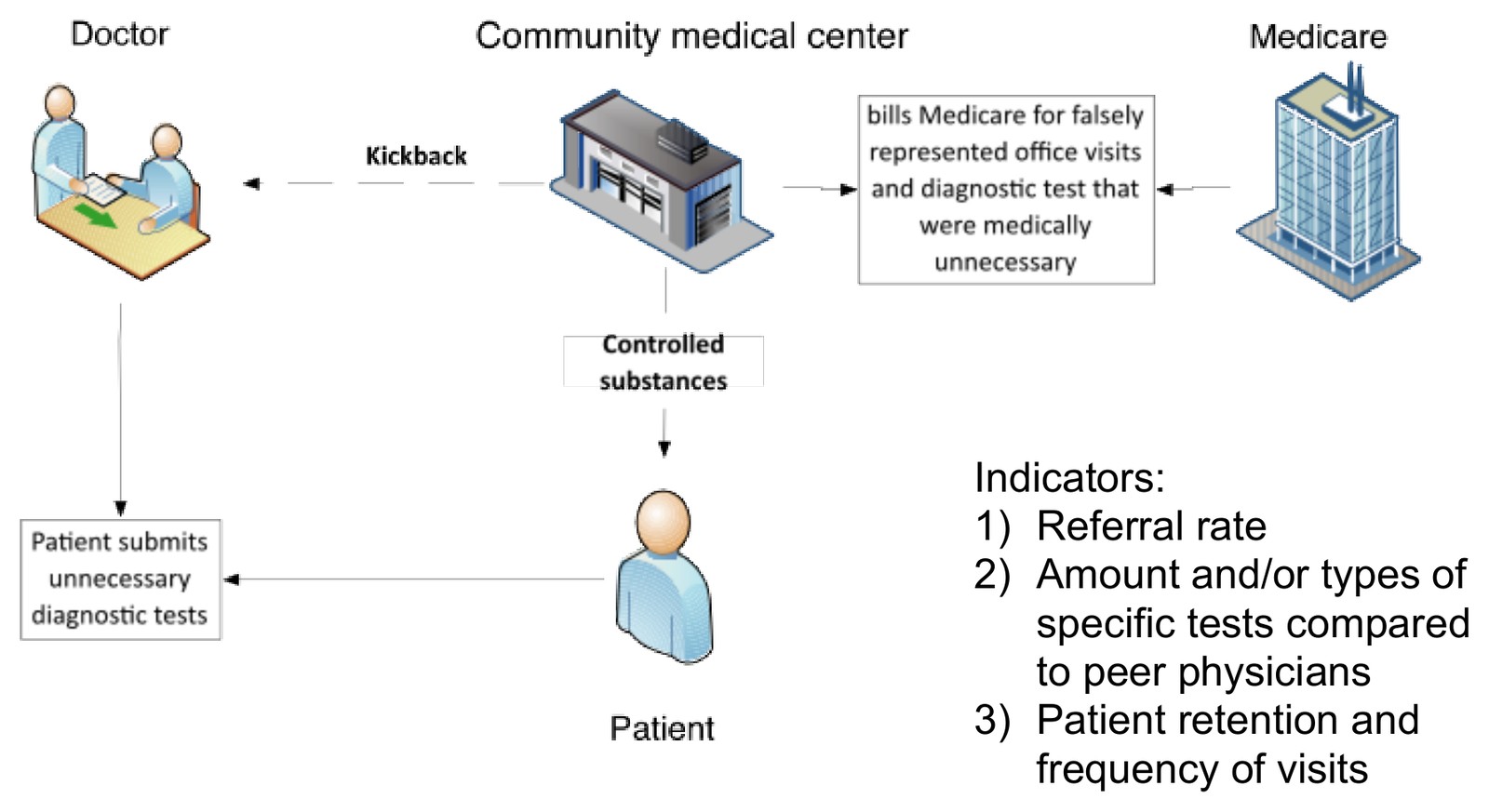
Some schemes can be caught during automatic claim processing, but most are hard to detect: services are invisible to the payer, claims are complex, and judging them requires medical expertise. Audits usually start from submission problems, random samples, whistle-blowers or known fraud cases. We focused on a fifth starting point: unusual claim behaviour found with unsupervised methods, which can uncover previously unknown fraud schemes, the unknown unknowns.
A multidimensional data model for Medicaid
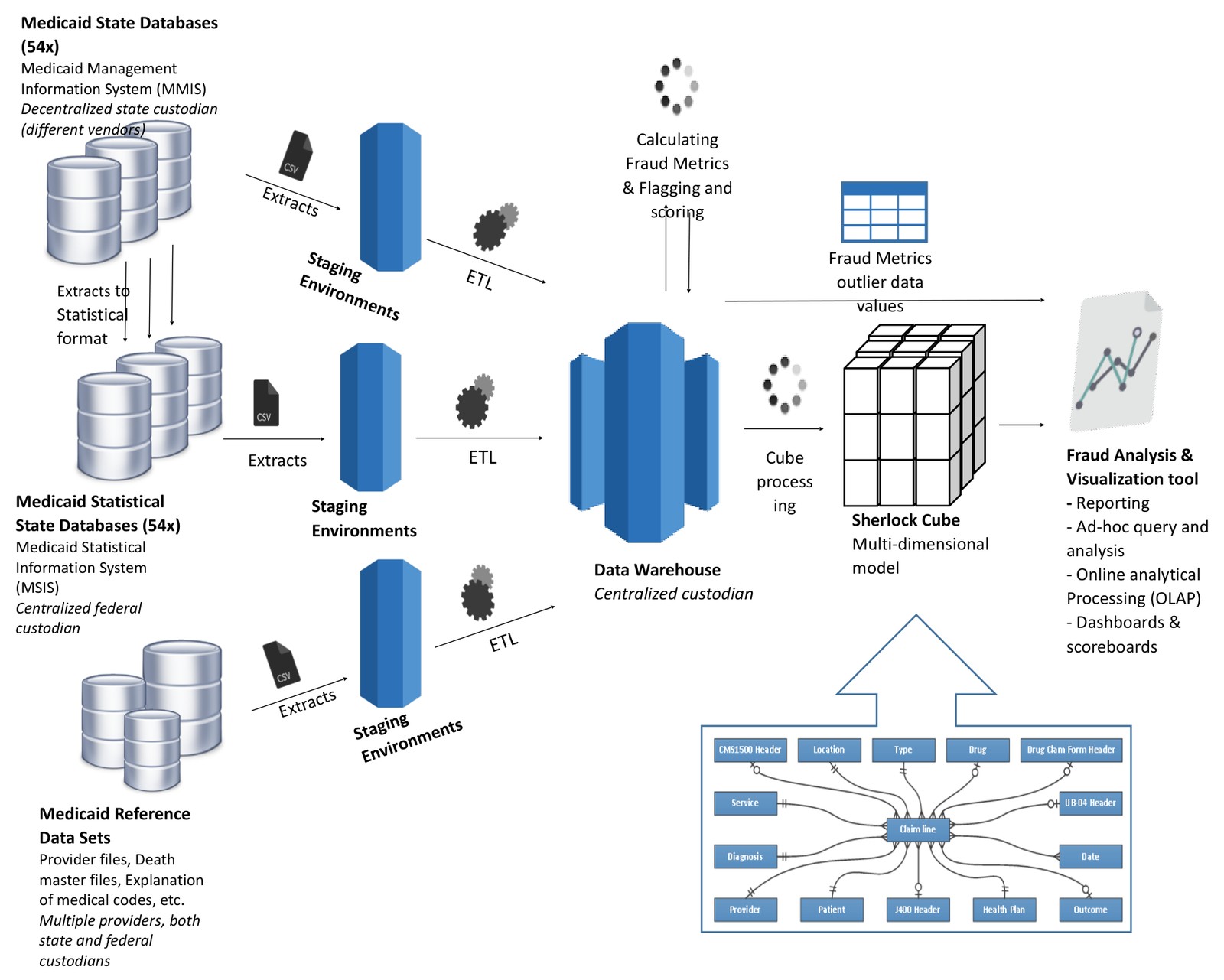
Building on Sparrow’s classification of fraud types, we developed a Medicaid multidimensional schema and data views that address the most prevalent known fraud types (Procedia Technology, 2013). Claims data from the decentralised state systems, the federal statistical databases and reference data sets are integrated in a central data warehouse and a multidimensional cube, on which fraud metrics, outlier flags and scores are calculated.
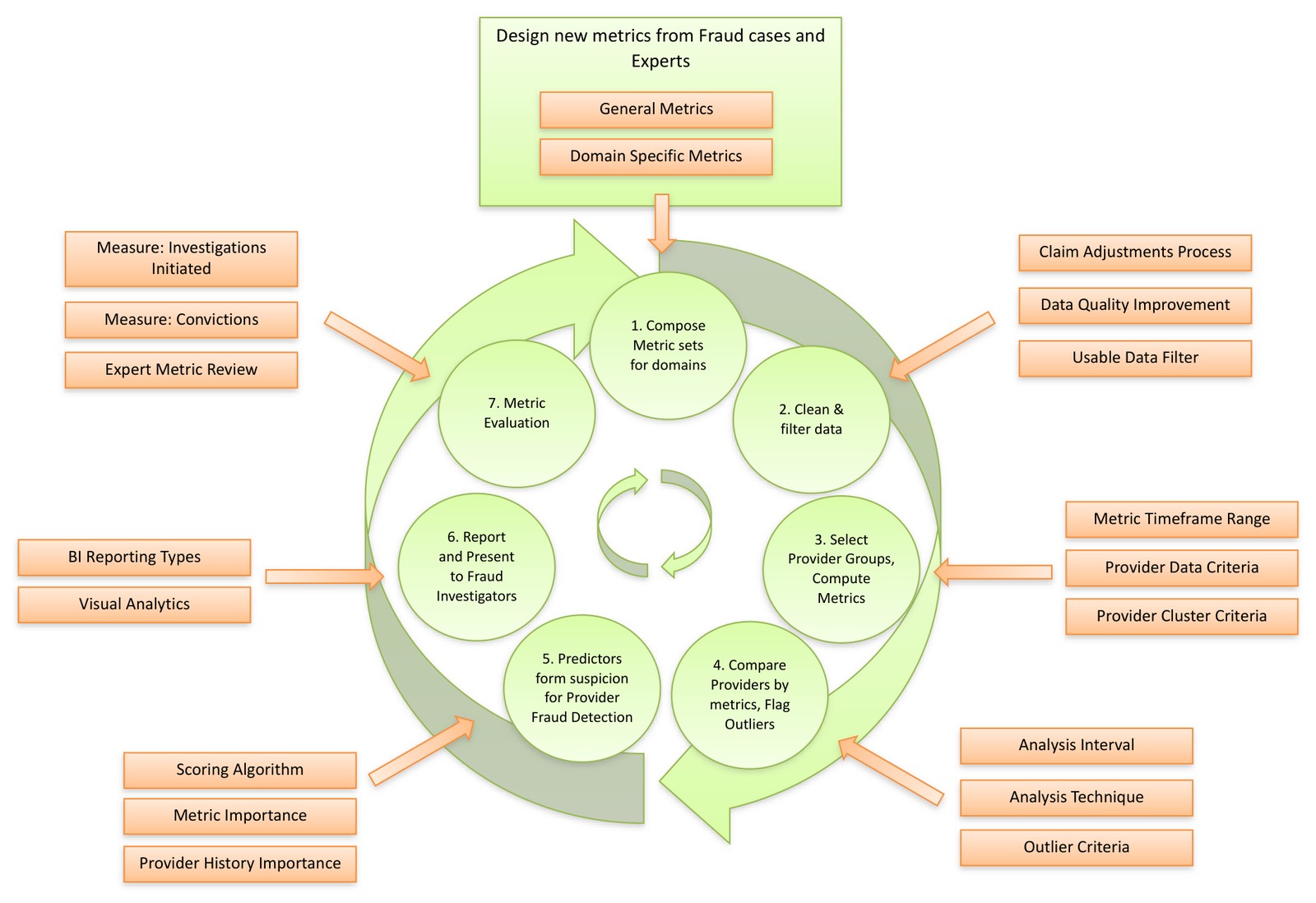
The analysis follows an iterative method, shown at the top of this page: metrics are designed together with fraud cases and experts, computed for provider groups, compared to flag outliers, and turned into reports for fraud investigators, whose feedback is used to evaluate and refine the metrics.
Outlier detection in the dental domain
We applied the method to 650,000 dental claims from eleven months of one state Medicaid programme, focusing on 360 primary dental providers (ICEIS 2014; International Journal of Accounting Information Systems, 2016). Metrics designed with fraud cases and experts were analysed with univariate, multivariate, time-series and box-plot techniques, looking for deviations from regression models, deviation clusters, single deviations from clusters, trend deviations and peaks.
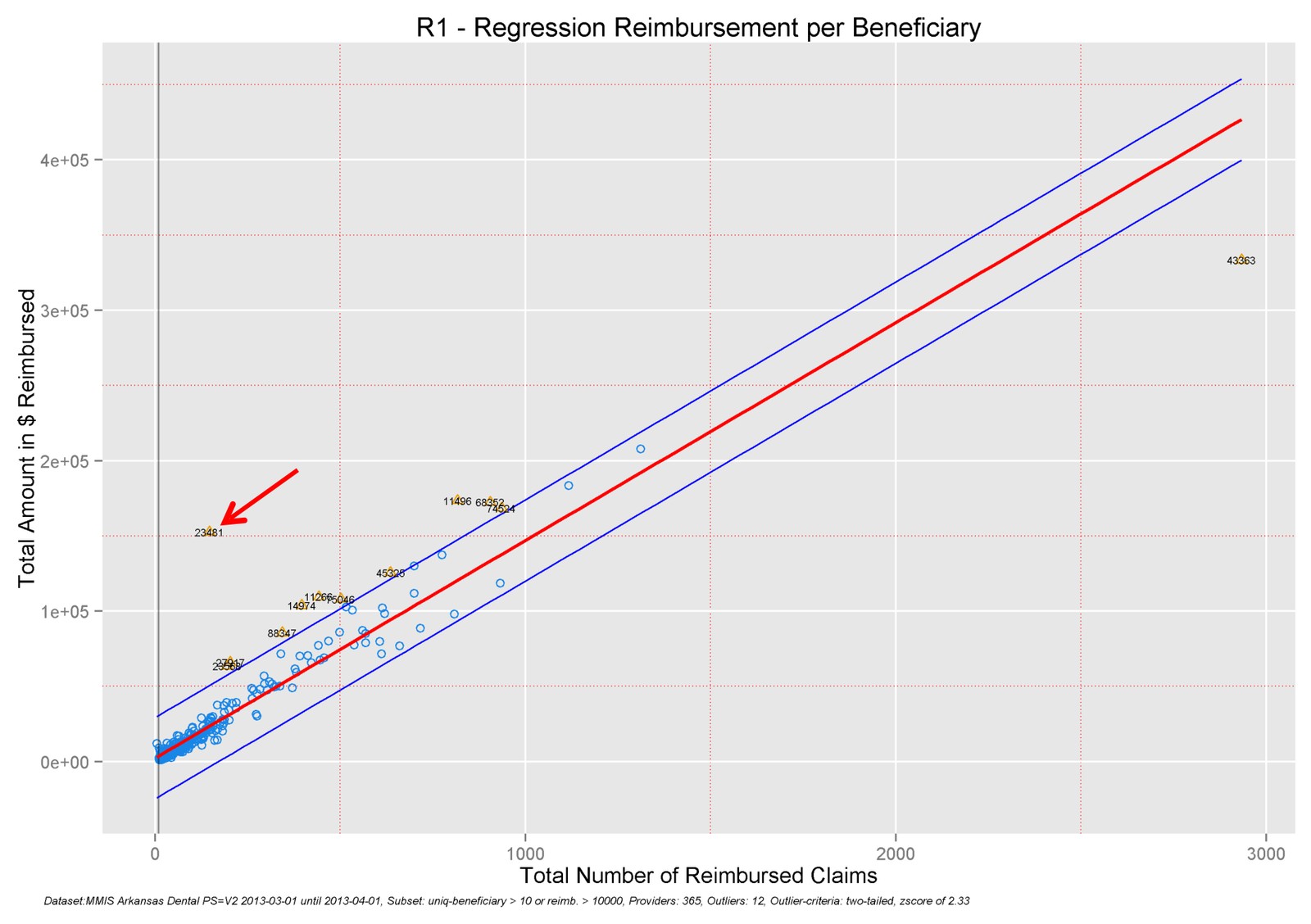
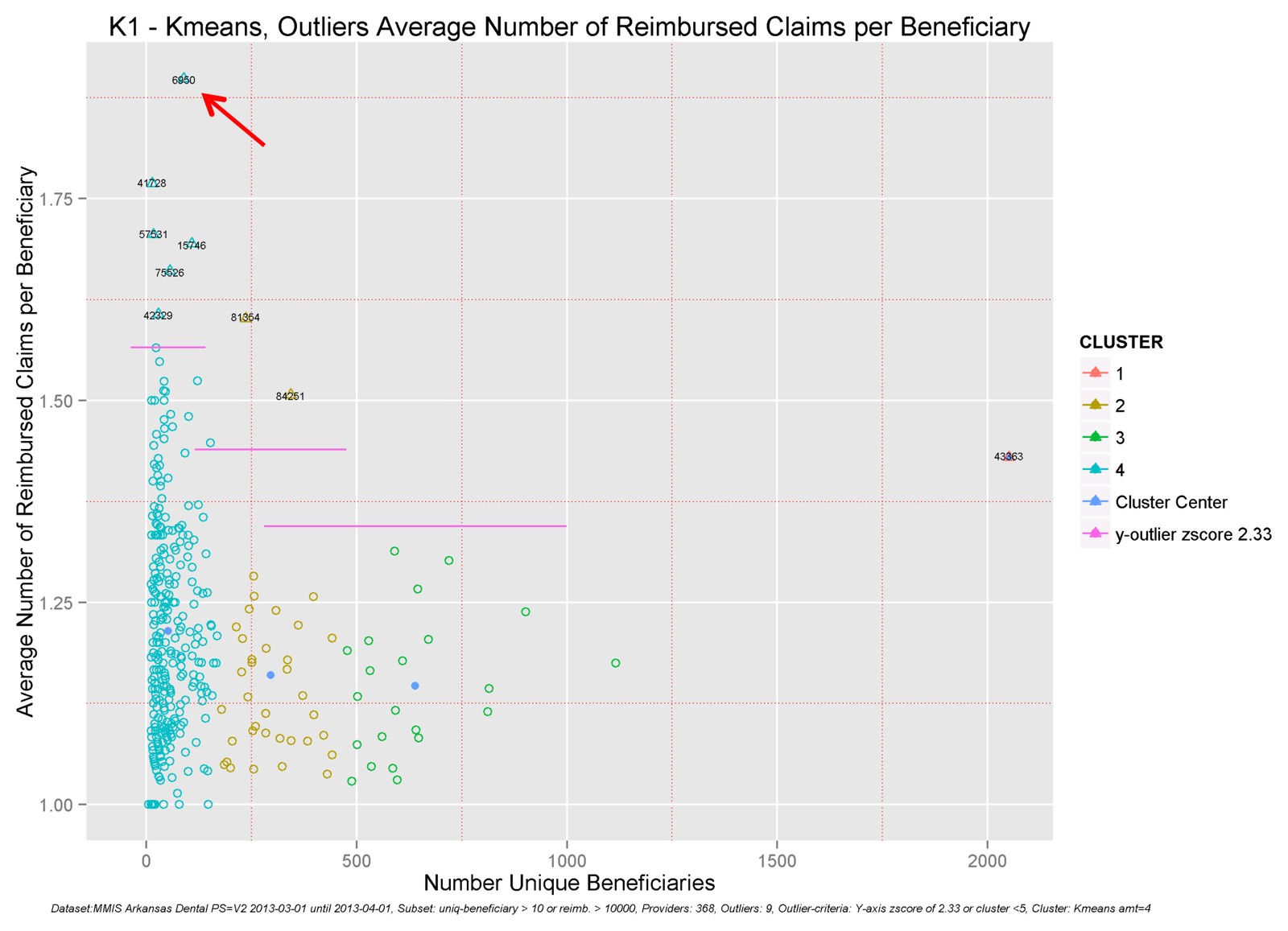
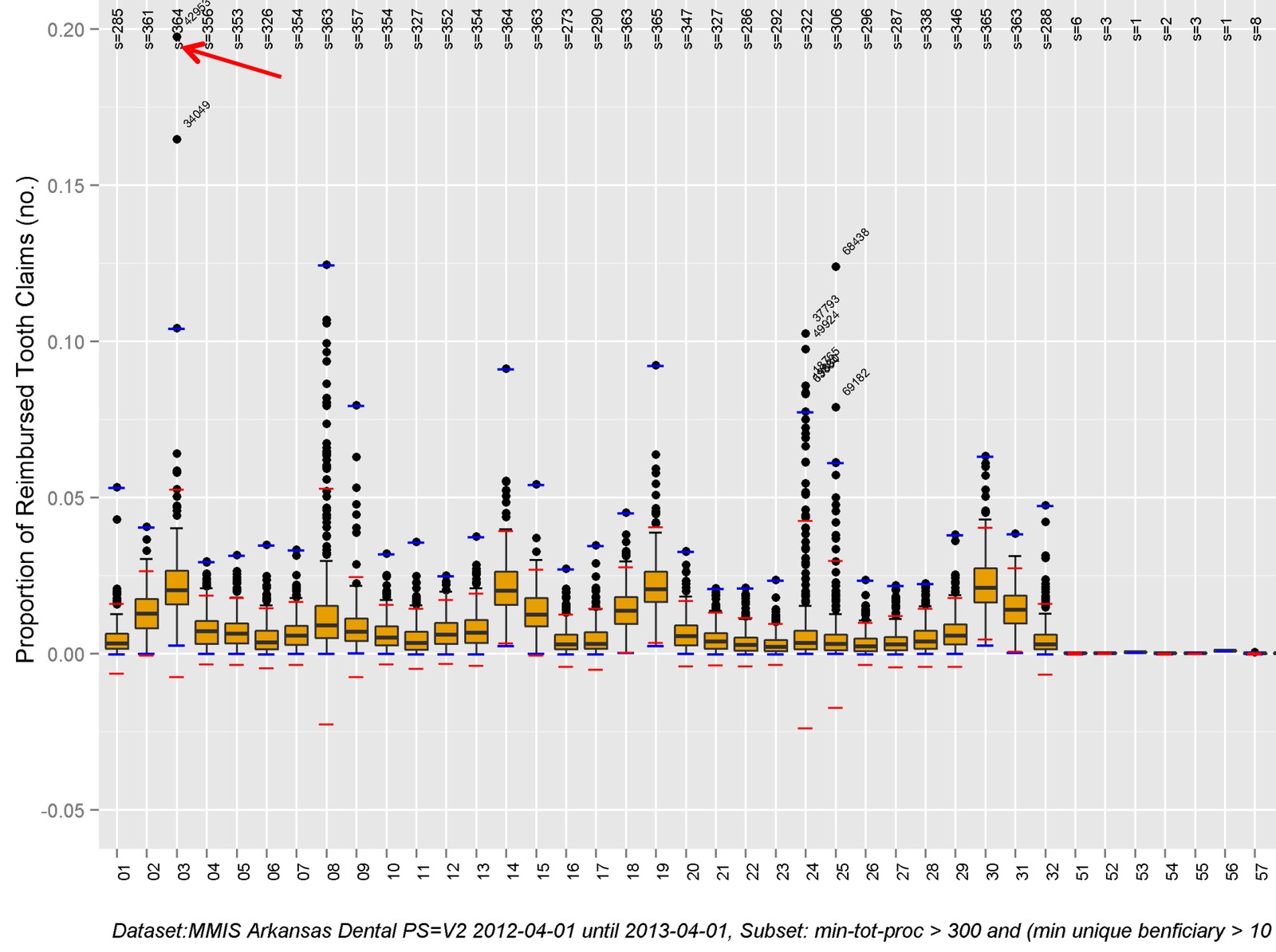
One metric was inspired by a known fraud case in which dentists claimed the same procedures over and over, changing only the patient IDs. Comparing the share of claims per tooth code, one provider stood out: almost 20% of its procedures were claimed for a single tooth code, about 140 procedures, while its second most billed tooth appeared only 27 times. Another provider’s claims suddenly rose from around 100 to almost 300 per week.
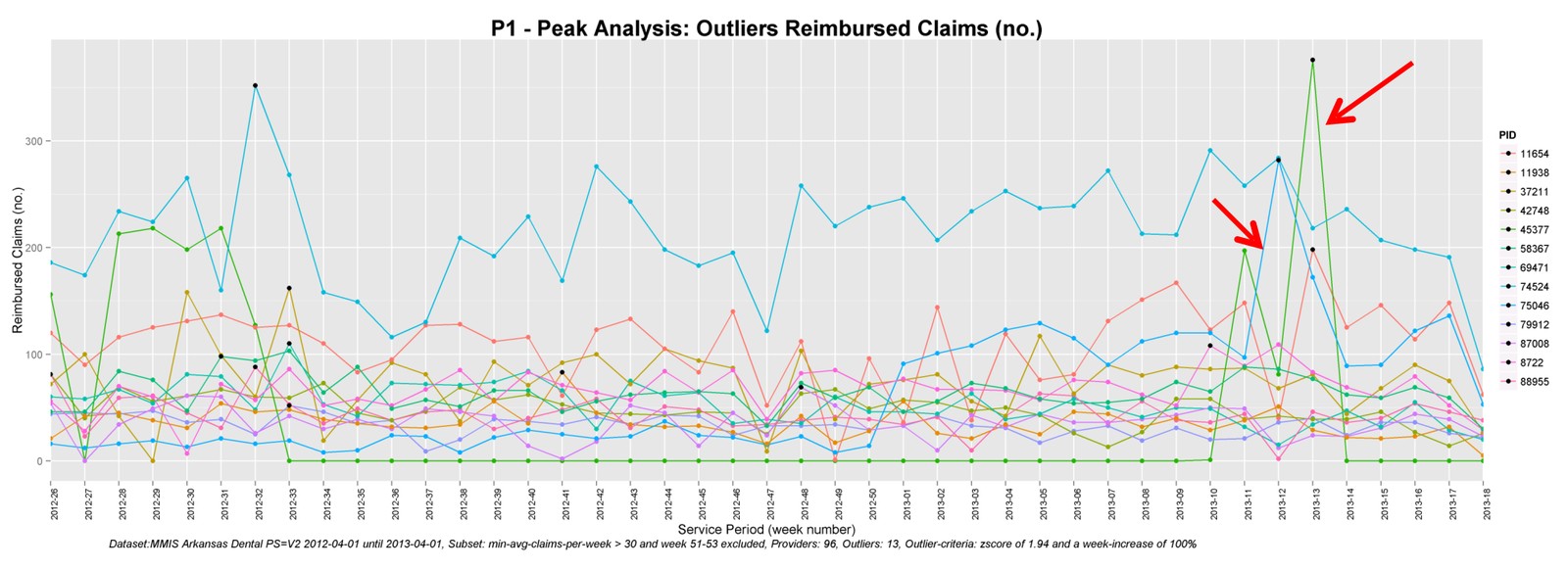
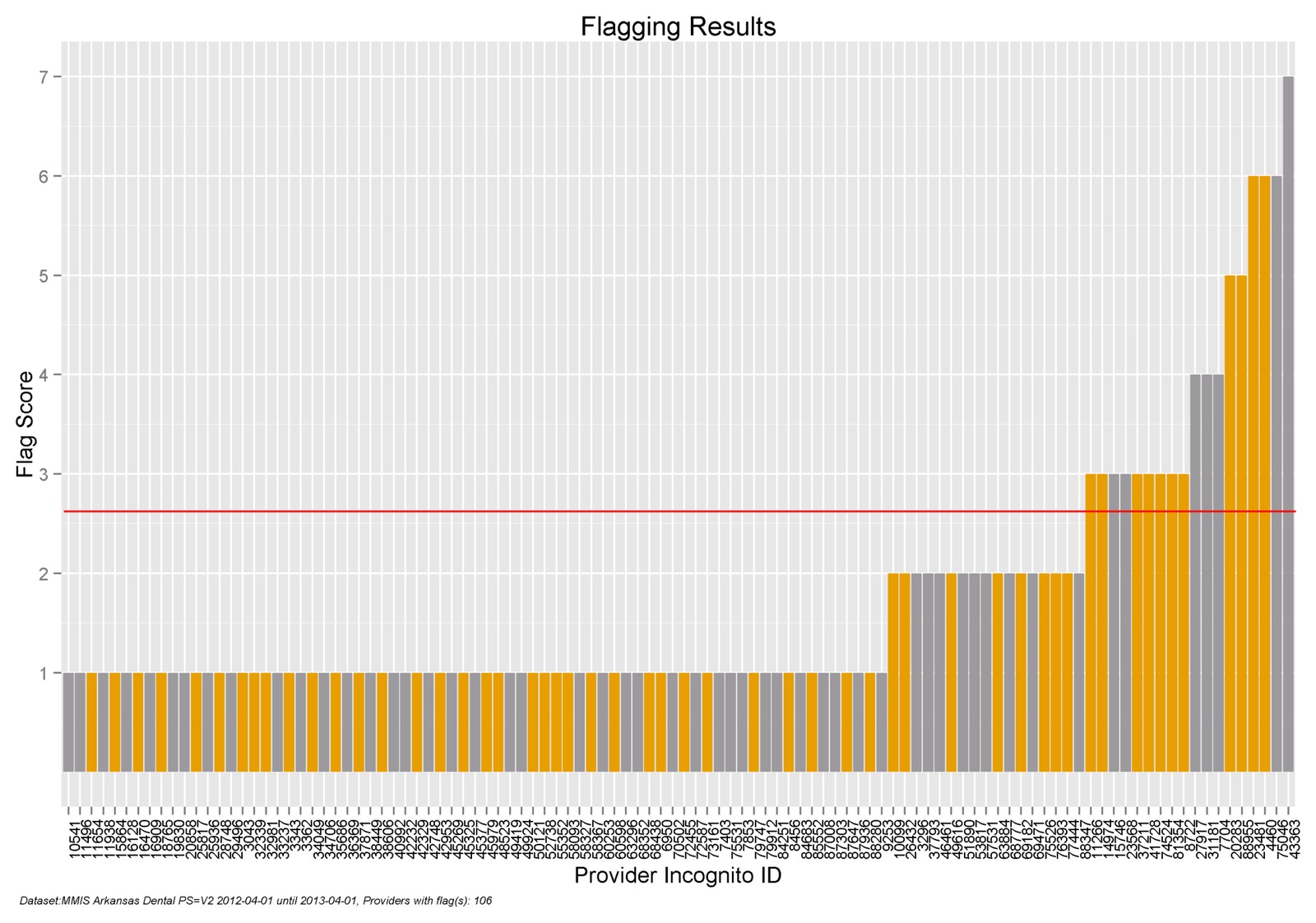
Each outlier raises a flag; providers with the most flags across all metrics become candidates for investigation.
Results
The method singled out 17 of the 360 providers (5%). In an expert evaluation, 12 of these 17 (71%) showed clearly anomalous and inappropriate claim patterns and were deemed appropriate for referral to officials for investigation: three cases of obvious fraud and nine very suspicious ones. The remaining five could be explained by special characteristics of the provider. Selecting the top-flagged providers thus proved a valuable targeting method, and individual provider analyses revealed new patterns of potential fraud.
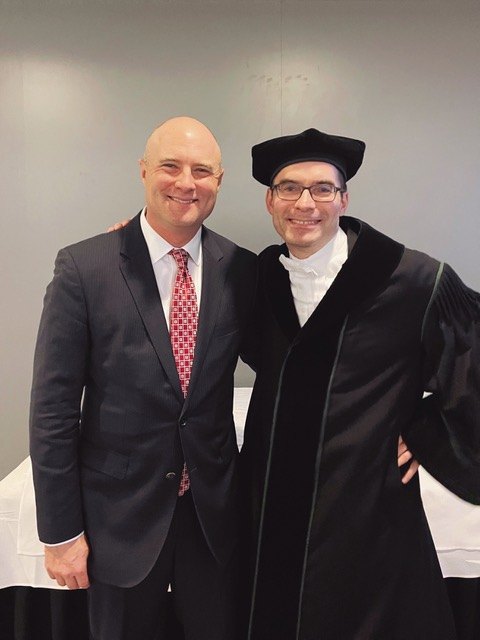
The work continued in Dallas Thornton’s doctoral dissertation Fighting Healthcare Fraud: Models and Techniques to Detect Fraud, Waste, and Abuse in Medicaid (2024), which I supervised. It is still part of my teaching in Data Warehousing, as an example of how a multidimensional data model and outlier analysis can serve the public good.
- van Capelleveen, Poel, Mueller, Thornton & van Hillegersberg (2016): Outlier detection in healthcare fraud: A case study in the Medicaid dental domain. International Journal of Accounting Information Systems 21: 18–31
- Thornton, van Capelleveen, Poel, van Hillegersberg & Mueller (2014): Outlier-based Health Insurance Fraud Detection for U.S. Medicaid Data. ICEIS 2014
- Thornton, Mueller, Schoutsen & van Hillegersberg (2013): Predicting Healthcare Fraud in Medicaid: A Multidimensional Data Model and Analysis Techniques for Fraud Detection. Procedia Technology 9