
Design Knowledge & Design Science Methods
What designers know, and the methods design research uses to study it
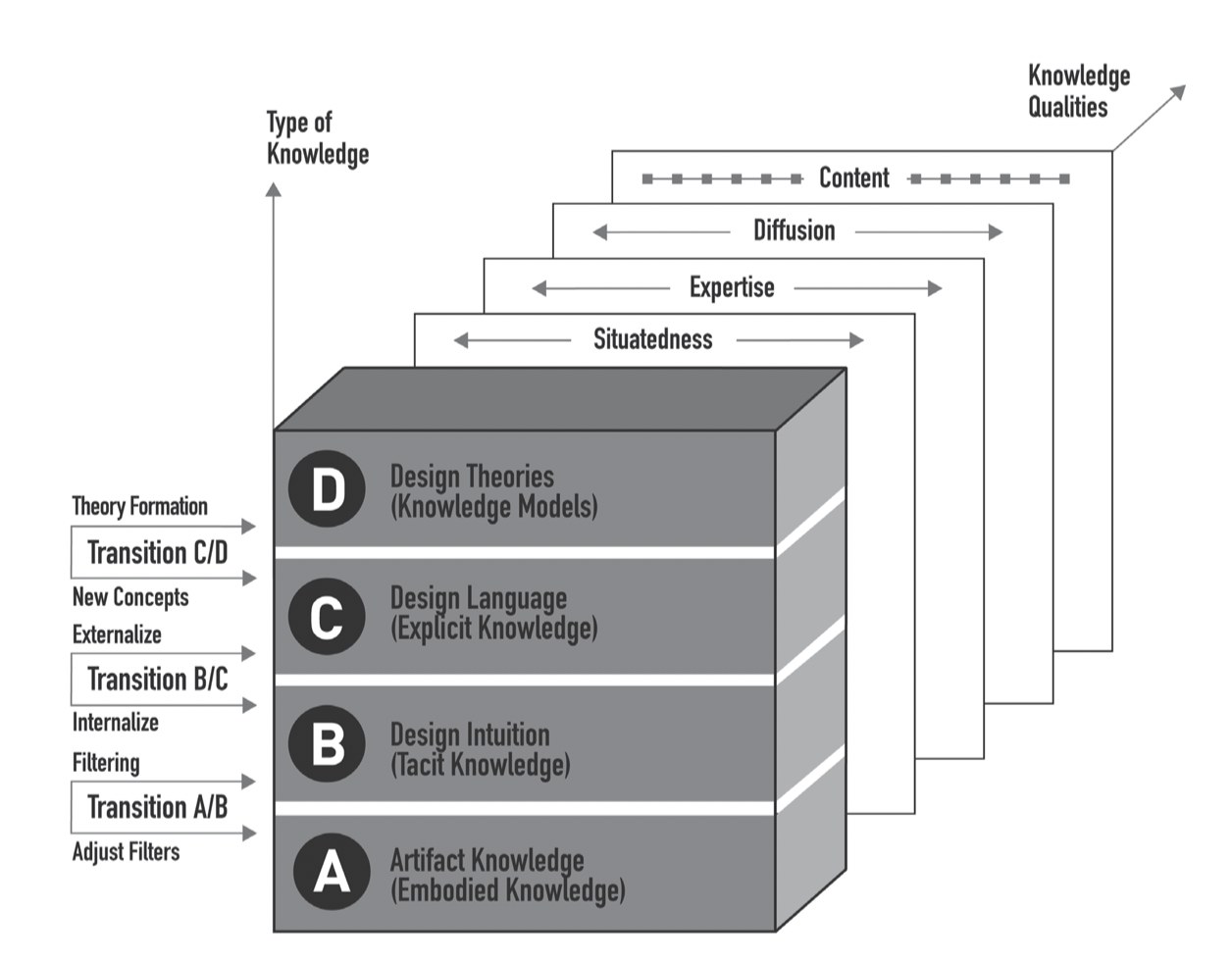
Design creates knowledge, but much of it never appears in a paper. It is embodied in artefacts, hidden in designers’ intuition, or expressed in a shared design language. Together with Katja Thoring and colleagues from TU Delft, I study what kinds of knowledge design produces, and which research methods can capture and evaluate it.
A unified model of design knowledge
Our unified model of design knowledge (Design Issues, 2022) distinguishes four types of knowledge:
- A · Artifact knowledge: embodied in the designed objects themselves.
- B · Design intuition: tacit knowledge in designers’ heads.
- C · Design language: explicit knowledge that can be communicated.
- D · Design theories: knowledge models that generalise beyond single cases.
Transitions connect these types: filters are adjusted between A and B, knowledge is externalised and internalised between B and C, and new concepts lead to theory formation between C and D. Each type of knowledge can also be described by four qualities: situatedness, expertise, diffusion and content.
The model builds on our early Typology of Design Knowledge (AMCIS 2010, Best Paper nomination) and on Understanding Artifact Knowledge in Design Science (AMCIS 2011), and it informed later work on the validity of design science.
A theory landscape of design
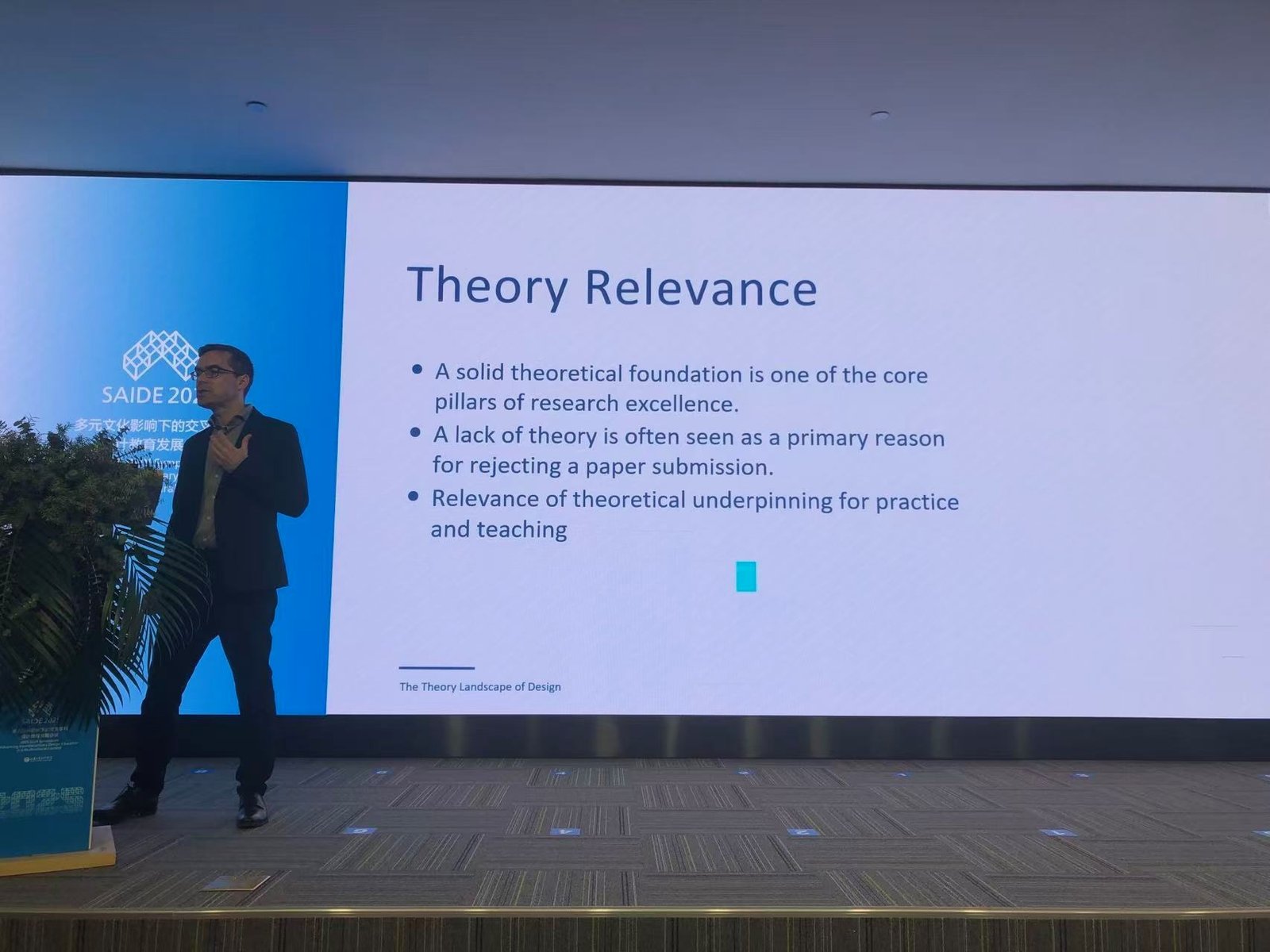
How does the design discipline use theory? A lack of theory is a common reason for rejecting papers, and Cash (2018) argues that design research builds and tests too little theory. With Katja Thoring, I mapped the theoretical discourse of the discipline (DESIGN 2024). Instead of coding papers by hand, we analysed them automatically with an ontology of named theories and natural language processing.
The corpus comprises all 4,451 papers of the ICED and DESIGN conferences from 2010 to 2023. The theory ontology combines three collections: the Theories Used in IS Research Wiki (148 theories), the 101 design theories collected by Philip Cash and colleagues, and the theory branch of the Information Systems Ontology (321 entities). Extended with further design theories and part-of-speech patterns, it contains 722 named theories with 3,289 synonyms, organised by discipline.
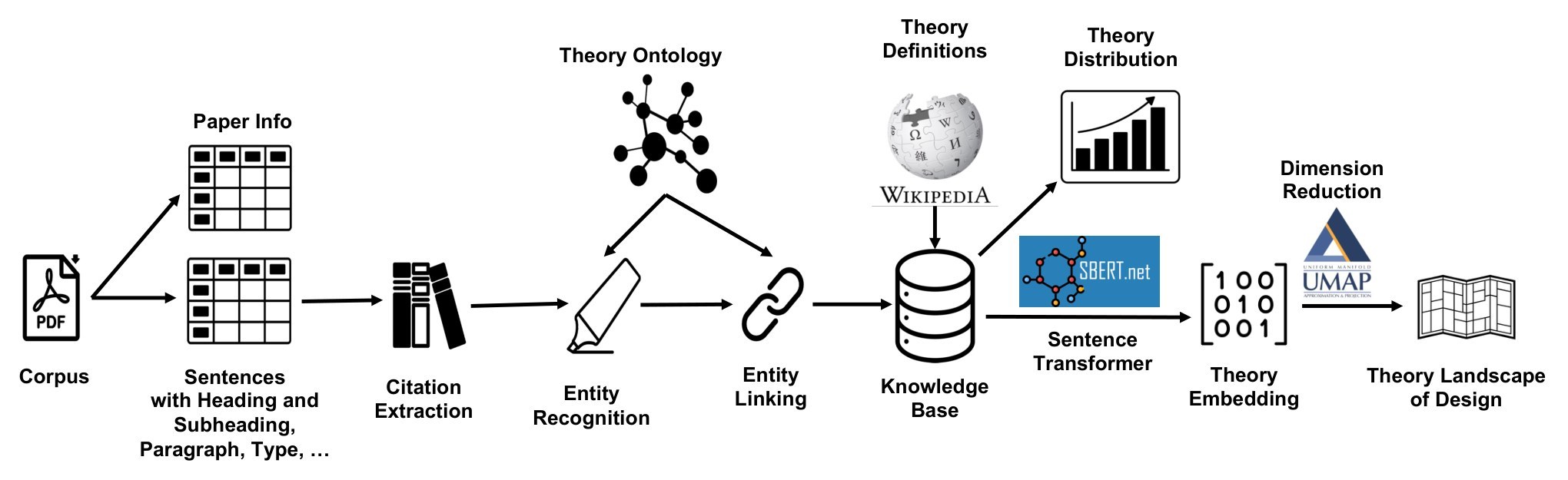
The pipeline extracts the structure, sentences and citations of each paper, recognises the theories mentioned and links them to the ontology. For the landscape, each theory’s name and a short definition from Wikipedia are embedded with a sentence transformer and projected onto two dimensions with UMAP, so that related theories appear close to each other.
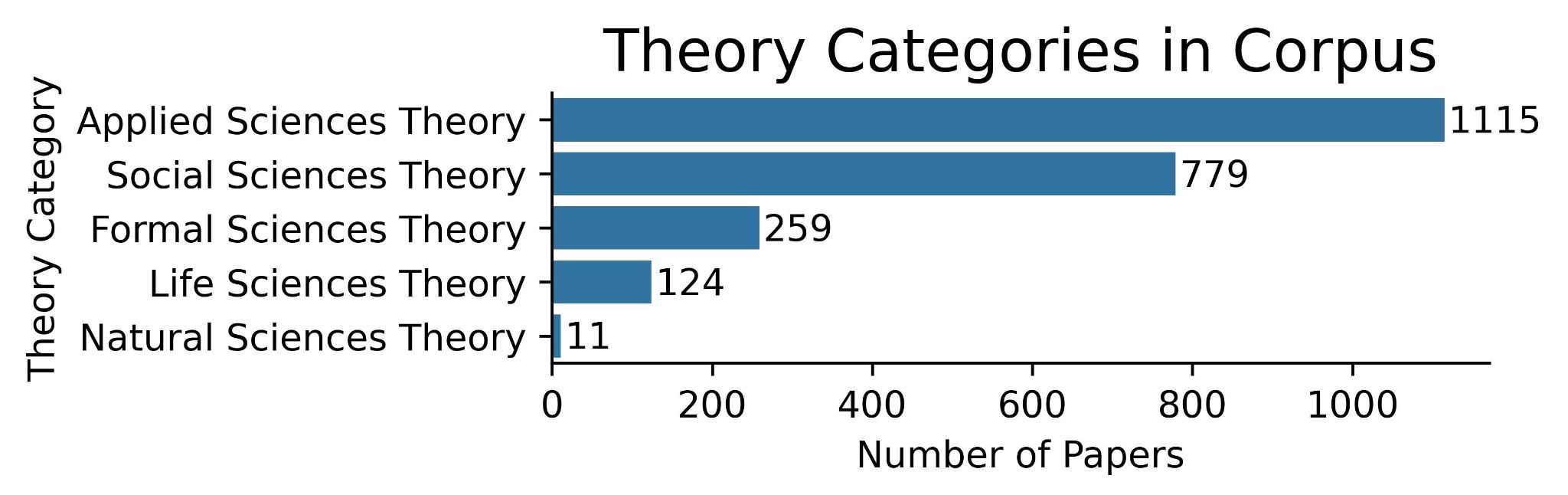
Only 40% of the papers (1,781) mention at least one named theory, which supports Cash’s critique. Of the 722 theories in the ontology, 324 appear in the corpus. The most frequent are the theory of inventive problem solving (TRIZ, 219 papers), the function-behaviour-structure model (162) and affordance theory (147). Most theories come from the applied sciences, which include design theories, and from the social sciences; the life and natural sciences are hardly used.
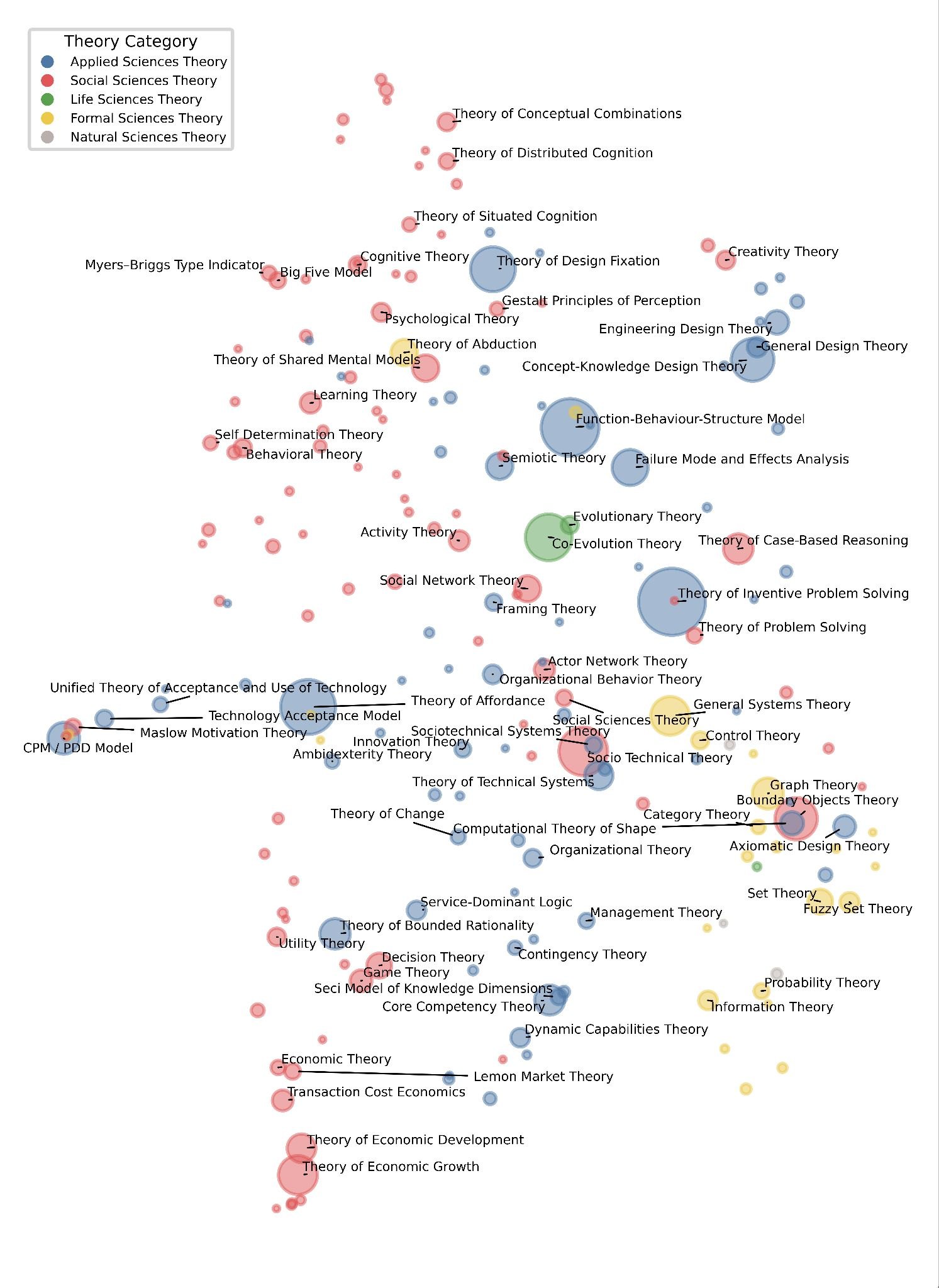
The landscape shows that many applied and design theories lie close to social-science theories. This raises a question for future research: do design theories re-invent existing theories, or do they scope and extend them? The approach is also fast: at the 30 minutes per paper that Cash reported for manual coding, the corpus would have taken about 742 hours. Next steps include design journals and the Design Research Society conference, and changes in theory use over time. In 2025 I presented the landscape in a keynote at Shandong University of Arts & Design in China.
Workshops as a research method
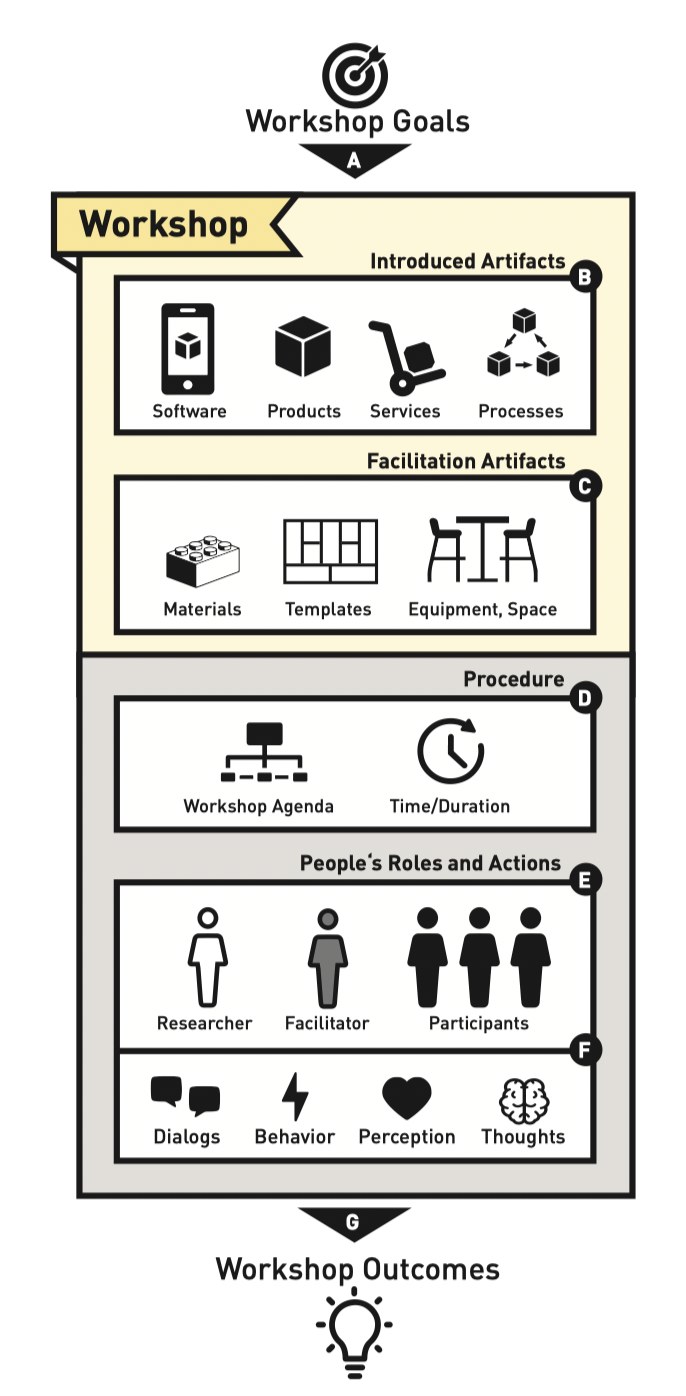
Workshops are everywhere in design research, but they are rarely treated as a rigorous research method. Our guidelines (HICSS 2020) describe how to design and evaluate artefacts through workshops, from the workshop goals through the introduced artefacts, facilitation artefacts, procedure, and the roles and actions of researchers, facilitators and participants, to the workshop outcomes.
Technology-supported design research
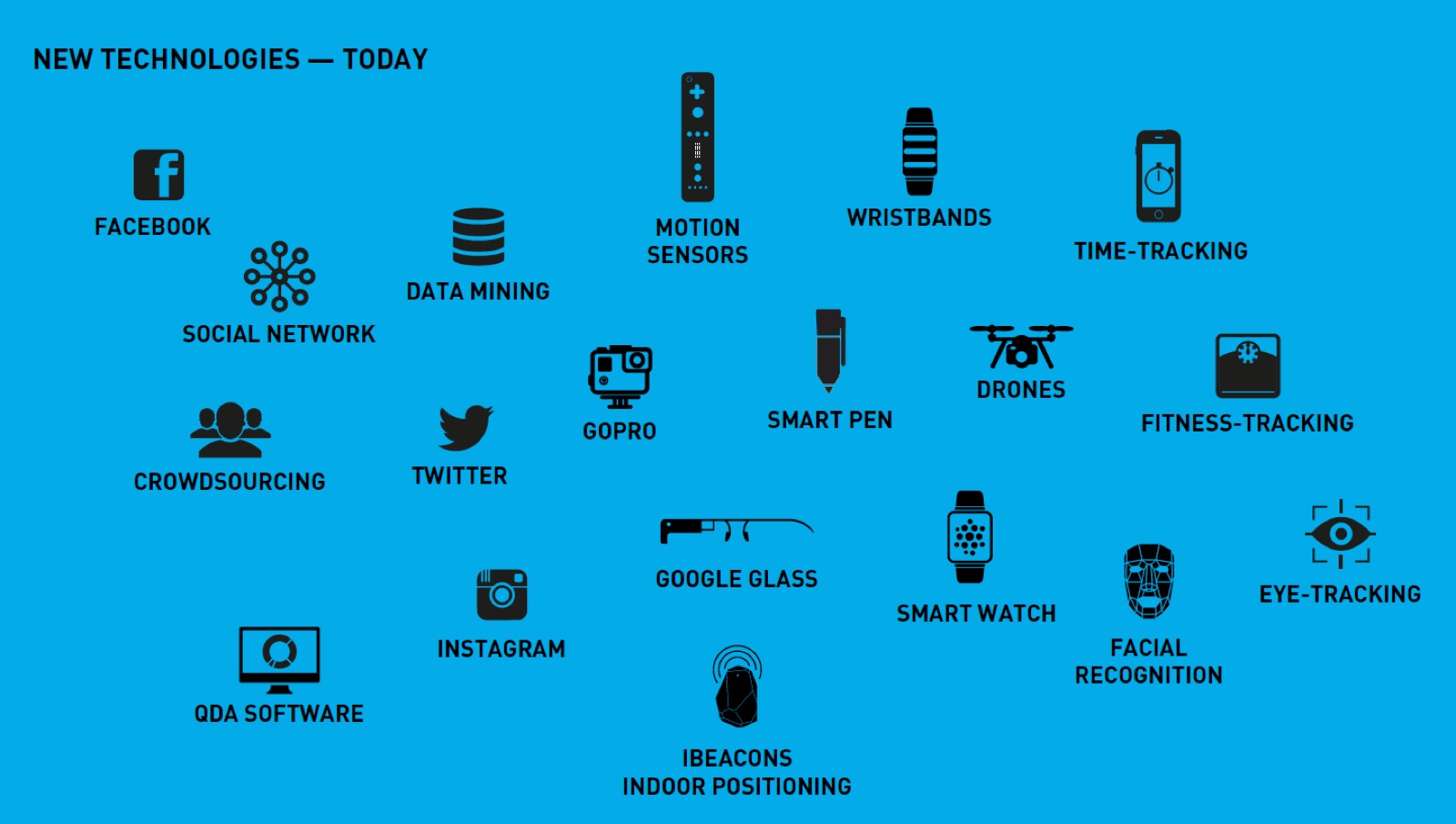
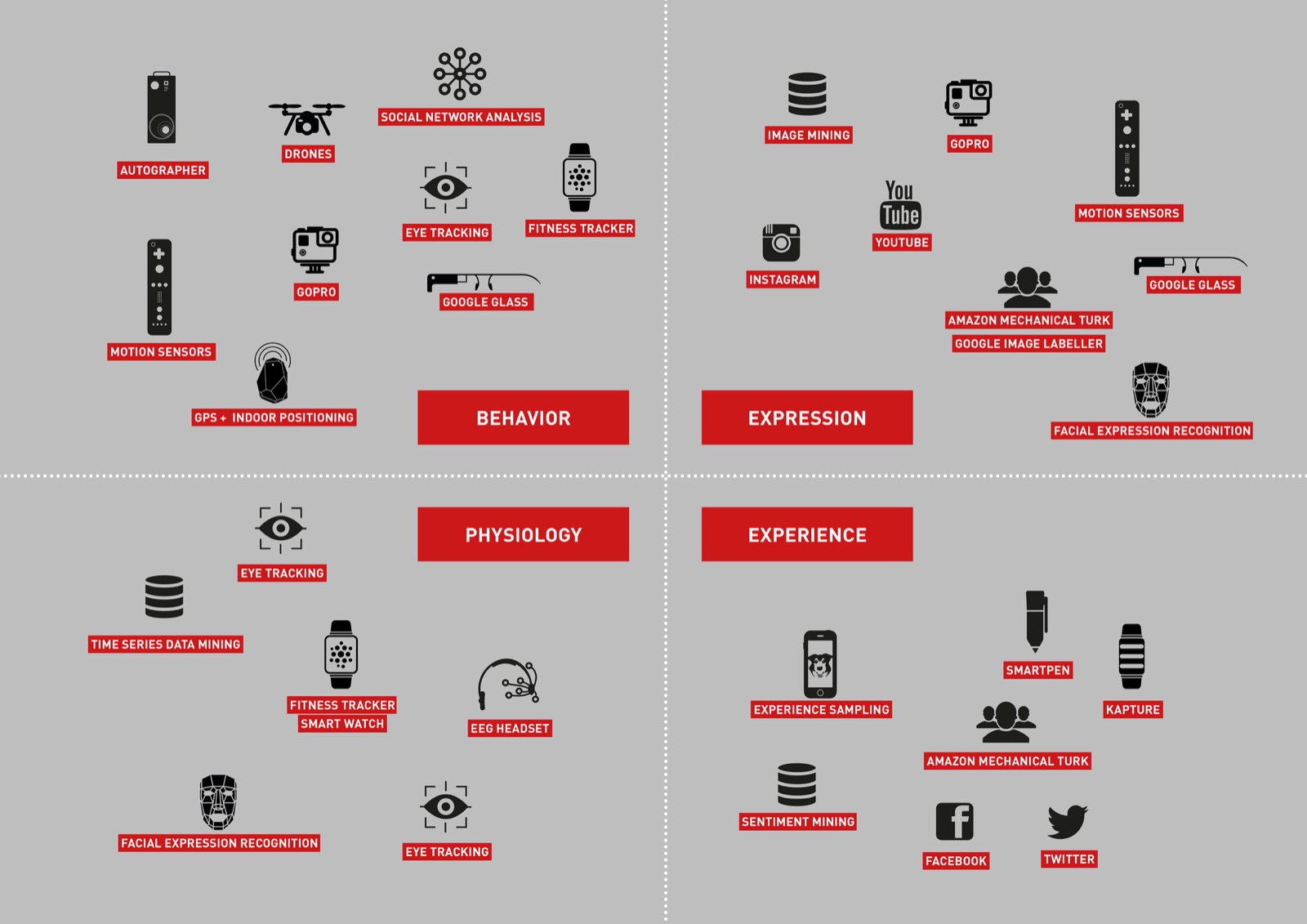
What can new technologies add to qualitative user research, which usually relies on observation and interviews? We developed a toolkit that lets design researchers extend their projects with technology-supported methods: a framework of the possible uses of different technologies, 32 technology cards, a canvas for individual research questions, and stickers for each technology. Decision trees show which technology suits which kind of research question, from behaviour and physiology to expression and experience. The ICED 2015 paper was rated among the top 10% of papers.
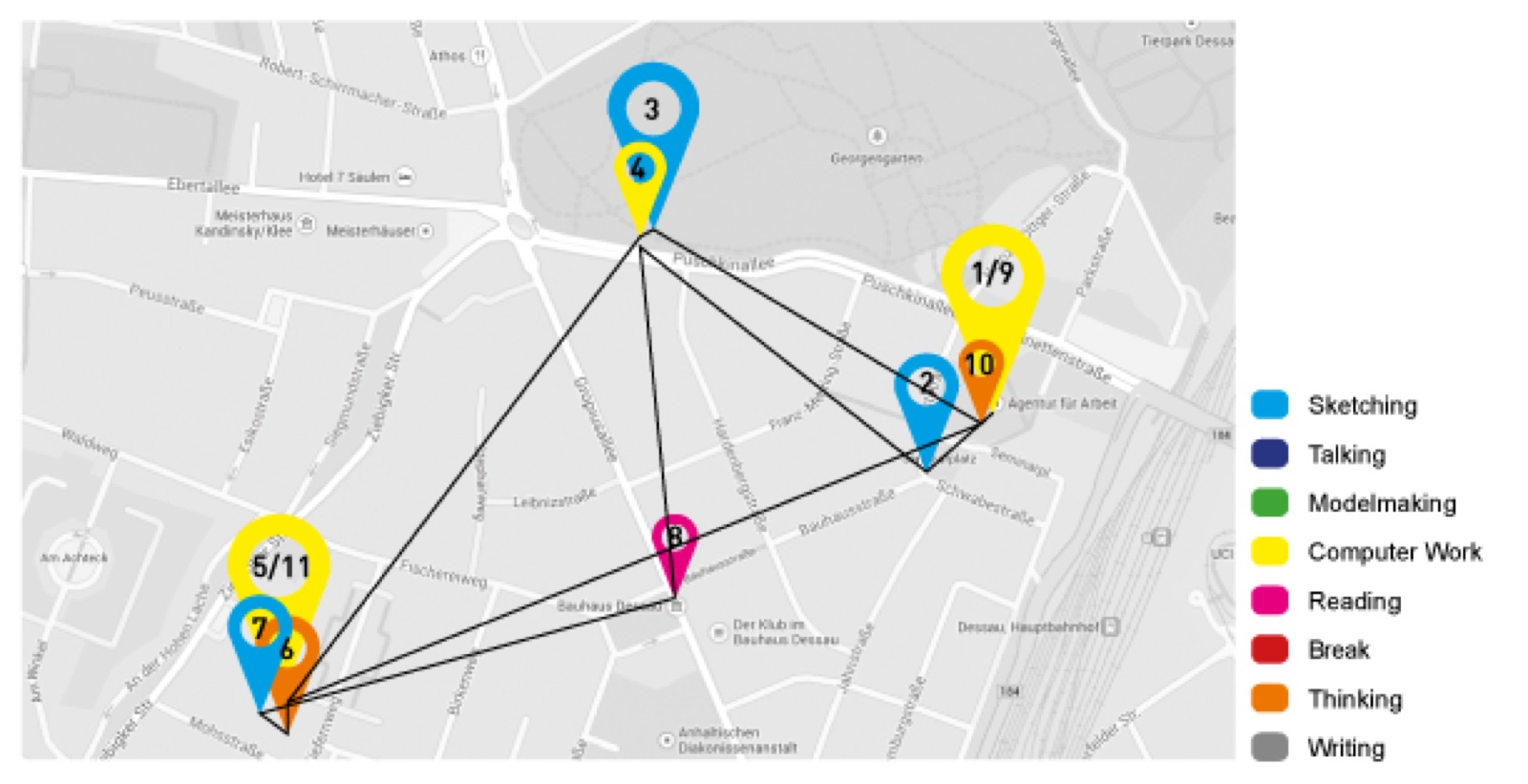
- Wearable-camera ethnography. Students wore sensor-triggered Autographer cameras on their campus for two weeks. Photos and metadata (position, time, temperature) were analysed semi-automatically with clustering and image recognition, revealing activities and places, as well as the method’s limits such as privacy and data overload (CHI 2015 Extended Abstracts).
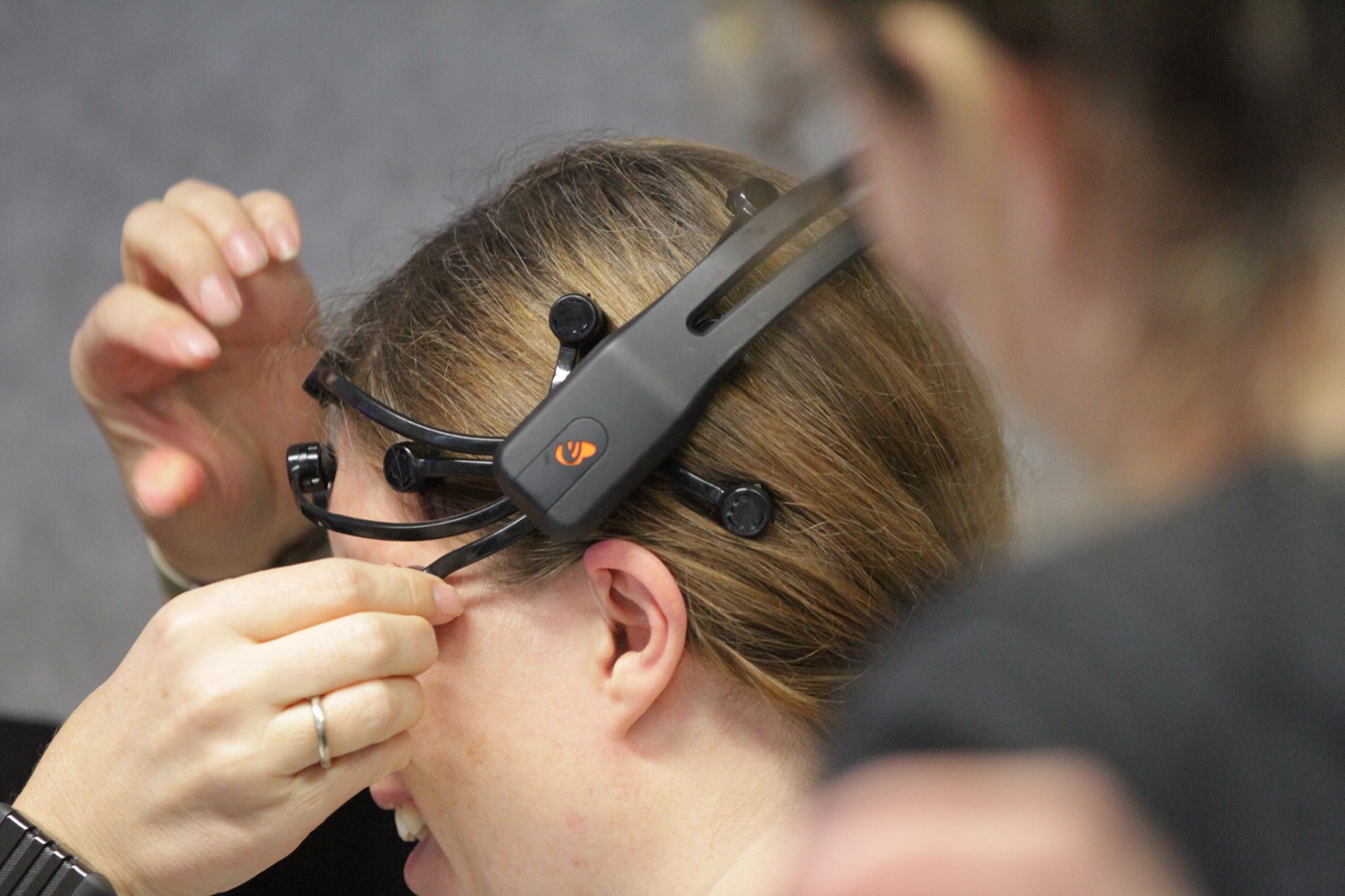
- Emotion measurement. A framework categorises technologies from experience sampling and facial recognition to fitness trackers, smart glasses and EEG headsets by the kind of experience and emotion data they capture (Design & Emotion 2016).
- NewTech4DR workshops. With Katja Thoring and Alexander Müller-Rakow we ran hands-on workshops at DGTF 2016 in Dessau and DRS 2016 in Brighton, where participants tried out the technologies and mapped them onto their own research.
Cultural probes
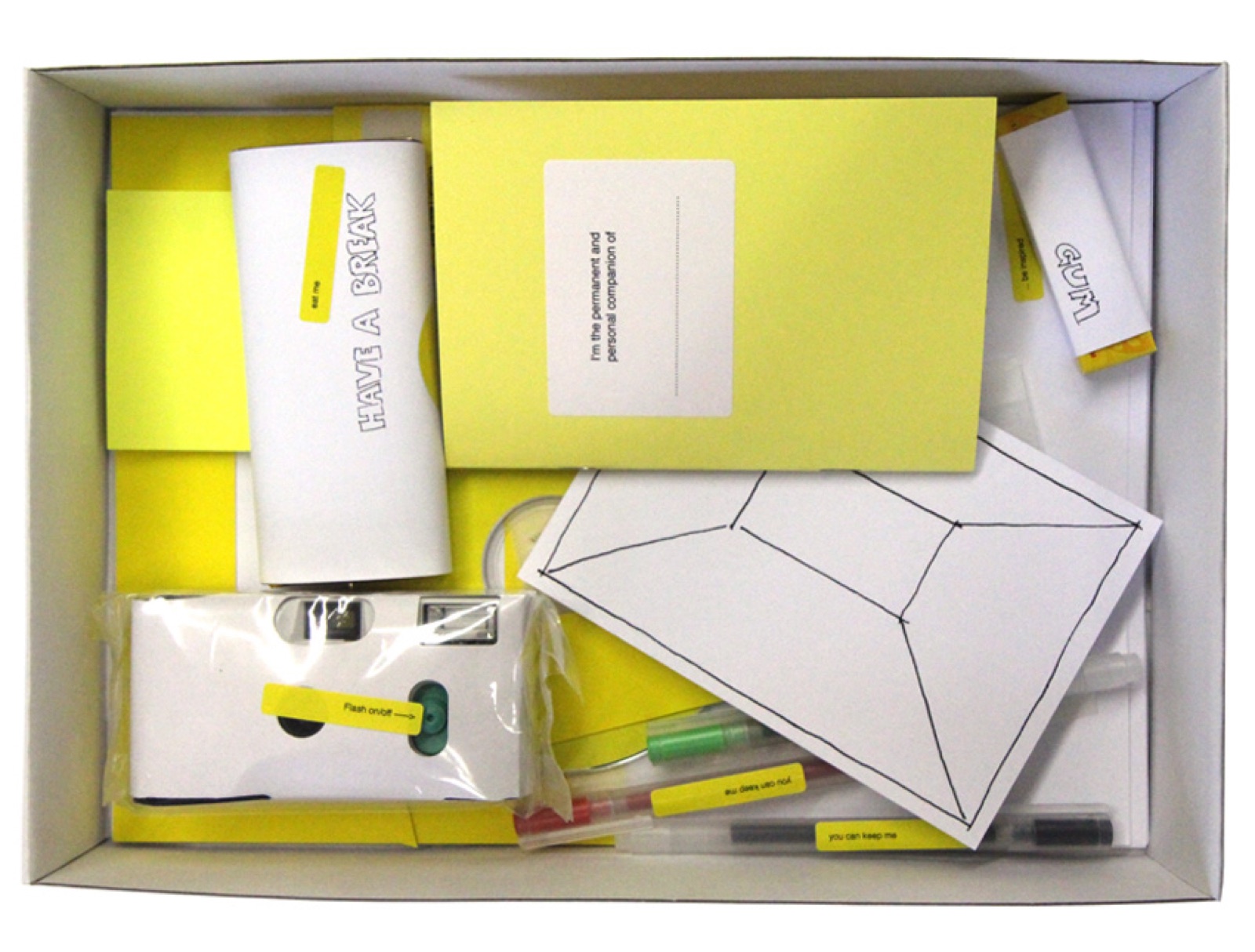
Not every context can be observed continuously. Cultural probes are a self-ethnography method: participants receive a kit of tools and tasks and document their own context over about two weeks. Our box contained a disposable camera, floor plans for locating the photos, a diary with prepared tasks, a frame and arrow to highlight parts of a photo, a postcard to grandma for sketching one’s own ideas, a journey map, and pens and chocolate for motivation. Tangible, carefully designed tools motivate participants to complete the tasks with equal care, and they work for people who are not familiar with digital tools.
With Katja Thoring and Carmen Luippold we used the probes to study the creative spaces of design schools (ICDC 2012), which fed into our research on creative workspaces, and reflected critically on the method itself (IASDR 2013).
Further work on design methods and theory
Further work examines how design methods can be corroborated (HICSS 2023), discusses negative creativity in design (DESIGN 2024), compares the Bauhaus with Design Thinking as design-educational schools (DESIGN 2020), and develops a technology inspiration model (HICSS 2026). In 2025 I also gave a keynote on The Role of Theories in Design Research at the Technical University of Munich.
Related project: Futures Methods for Design Science.
- Thoring, Mueller, Desmet & Badke-Schaub (2022): Toward a Unified Model of Design Knowledge. Design Issues 38(2): 17–32
- Thoring, Mueller & Badke-Schaub (2020): Workshops as a Research Method. HICSS 2020
- Thoring, Mueller, Lecuna & Badke-Schaub (2023): A Framework of Design Method Corroboration. HICSS 2023
- Thoring & Mueller (2024): A Theory Landscape of Design. DESIGN 2024
- Thoring, Mueller & Badke-Schaub (2015): Ethnographic Design Research with Wearable Cameras. CHI 2015 Extended Abstracts